
Your Results: CONSERVING

Your nervous system appears to manage stress and sensory load by:
conserving energy.
What this pattern may look like
Your nervous system has slowed things way down. Energy, motivation, and responsiveness may feel reduced. Everything can feel quieter, heavier, or more distant — like your system is pulling inward to protect itself.
Conserving Motto: Slow down to conserve energy.
Ocean & Sailboat
One way to think about nervous system patterns is like navigating a sailboat on the ocean. The ocean 🌊 represents the nervous system, and the sailboat ⛵️ represents your lived experience in your body.
Conserving: The ocean water 🌊 (your nervous system) becomes very still and heavy, with very little wind in the sails. The sailboat ⛵️ (your experience in your body) may drift slowly or struggle to move forward, conserving energy as it waits for conditions that make movement easier.
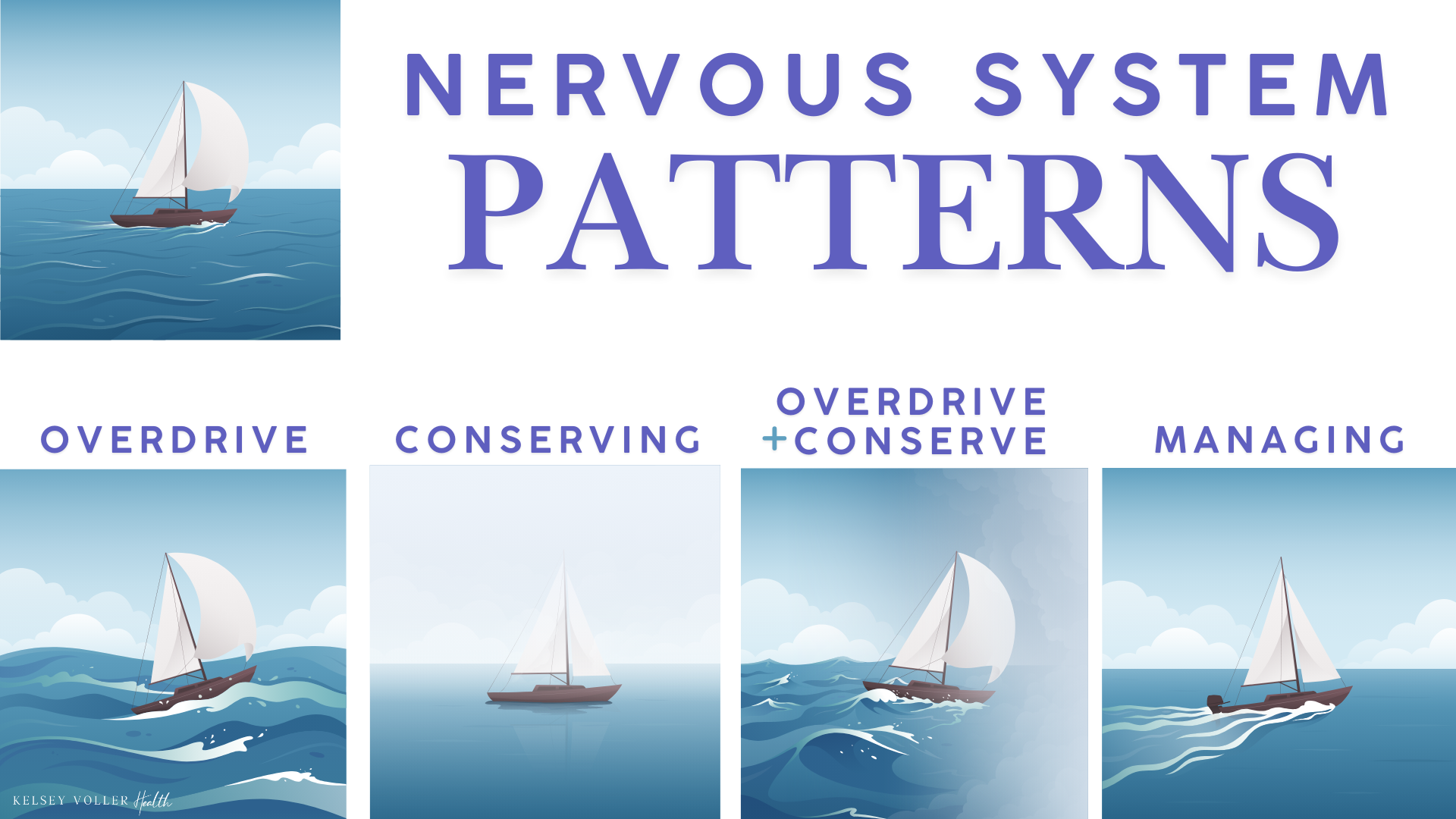
Nervous system pattern: conserving
👉🏼 Common Feelings:
Heavy
Quiet
Flat
Disconnected
Foggy
Low energy
Hard to care or engage
Wanting to rest or withdraw
Low motivation
Numbness
Common Experiences:
Difficulty initiating tasks
Low motivation or drive
Feeling slowed down or shut off
Wanting to reduce stimulation or be alone
Feeling numb or detached at times
Phone scrolling instead of completing important tasks
Difficulty completing basic household tasks
Rest reduces pressure but doesn’t fully restore energy
Conserving is not laziness. It’s a survival response.
What this pattern is trying to do 🤔
Conserving is a protective strategy. When stress, demand, or sensory load feels like too much, your nervous system conserves energy by lowering output.
This isn’t giving up. It’s your system prioritizing survival and recovery when resources feel limited.
Your nervous system has learned that conserving energy is the most protective response under prolonged stress or overwhelm.
🧠 This pattern often shows up in people who are:
Been overwhelmed for a long time
Pushed past their limits repeatedly
Had to function without enough support
Learned that slowing down was safer than staying engaged
Keep in mind 👇🏼
Conserving is not laziness, avoidance, or failure.
Conserving is a sign your system is trying to protect you by doing less, not because you can’t do more — but because it hasn’t felt safe or supported enough to. It’s your body conserving resources when demand is great than capacity.
This pattern is especially common in people who have experienced long-term pressure without enough support.
Conserving can feel confusing, especially if you want to engage but your system won’t cooperate.
💓 A gentle reframe
Nothing about this means you’re broken or stuck. Conserving reflects a nervous system that learned rest and withdrawal were necessary. This is an intelligent response — your system chose preservation over total depletion.
The work here isn’t pushing yourself back into action. It’s helping your system feel safe enough to gently re-engage, gradually. Your nervous system chose preservation over total depletion.
The goal isn’t to “push through” or force motivation — it’s to restore a sense of safety and capacity at the body level.
👉🏼 Supportive next steps (no fixing required)
Gentle, low-pressure re-engagement instead of forcing motivation
Warmth, comfort, and predictable rhythms
Very small, predictable sources of stimulation
Very small actions that build trust with your body
Orientation and gentle engagement before effort
Respecting energy limits without judgment
Slowly reintroducing movement and connection
You don’t need to wake your system up — you need to help it feel safe enough to re-emerge.
Curious how to work with this pattern?
Important Scope & Disclaimer
Somatic work offered through this practice is educational and wellness-oriented. It is not medical care, psychotherapy, mental health treatment, or diagnosis, and it is not a substitute for licensed medical or mental health care. Participation is voluntary, and individual experiences vary. No specific outcomes are promised or guaranteed. Clients are responsible for their own healthcare decisions and are encouraged to seek guidance from licensed professionals for medical or mental health concerns. Descriptions of nervous system patterns are provided for educational and informational purposes only and are not diagnostic or intended to identify or treat any medical or psychological condition.
This assessment is for educational and reflective purposes only. It does not diagnose or treat any medical or mental health condition. Nervous system patterns can shift over time and may look different in different contexts.