
Your Results: MANAGING

Your nervous system appears to manage stress and sensory load by:
actively managing
What this pattern may look like
Your nervous system is mostly stable, but that stability requires ongoing attention and effort. You may appear calm or capable on the outside while internally monitoring, adjusting, and managing your responses to stay functional and avoid overwhelm.
Things work — but they take energy.
Managing Motto: actively hold things together; effortful to stay steady while moving forward.
Ocean & Sailboat
One way to think about nervous system patterns is like navigating a sailboat on the ocean. The ocean 🌊 represents the nervous system, and the sailboat ⛵️ represents your lived experience in your body.
MANAGING: The ocean water 🌊 (your nervous system) is pretty still, with very little wind to carry the sails. The sailboat ⛵️ (your experience in your body) keeps moving forward by using its engine, requiring steady effort and careful attention to keep moving forward.
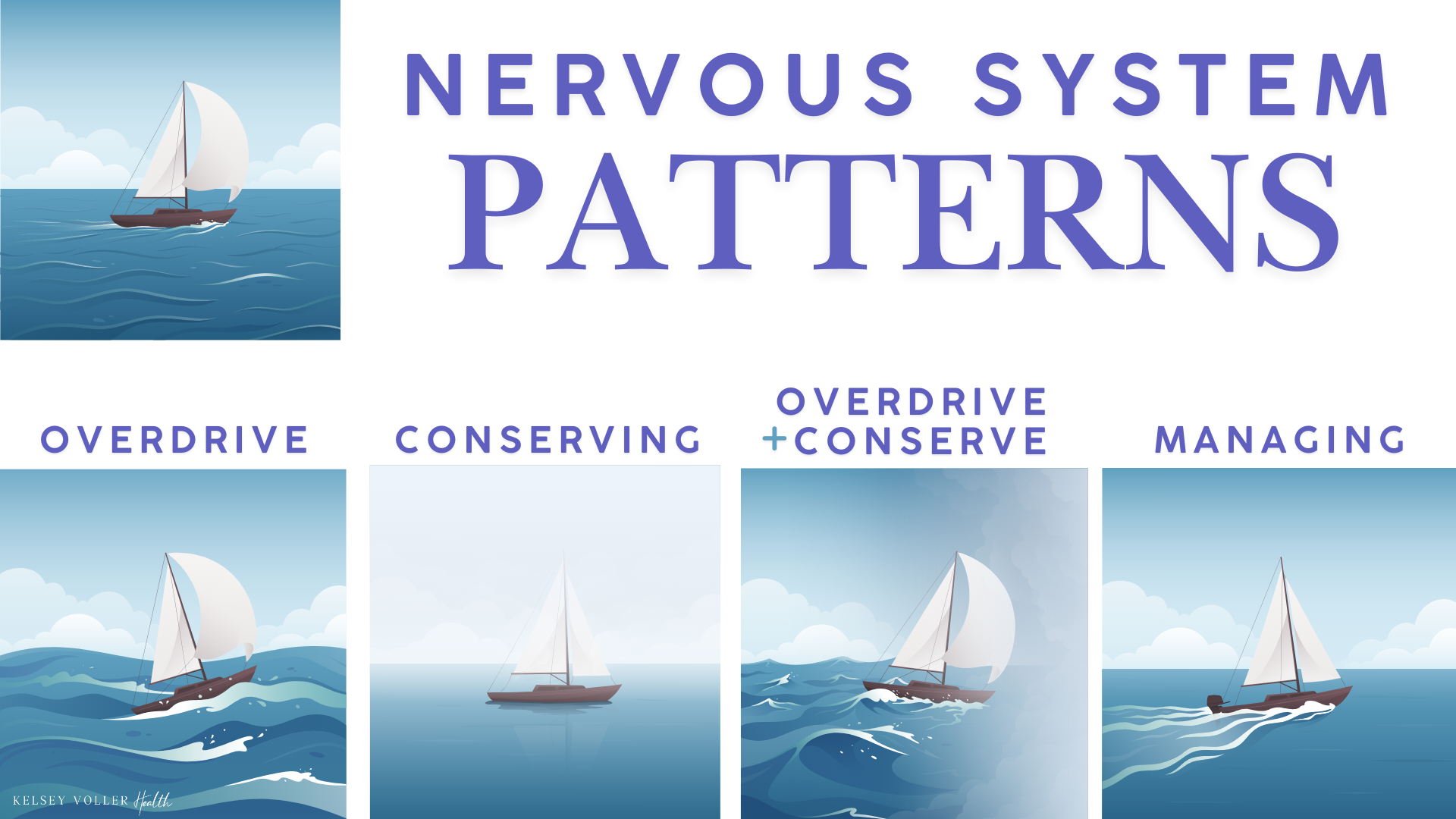
Nervous system pattern: managing
👉🏼 Common Feelings:
Mostly okay, but effortful
Aware and self-monitoring
Calm on the surface, busy underneath
Sensitive to stress or changes
Tired of always holding things together
Subtle tension or background effort
Common Experiences:
Using tools or strategies to stay steady
Feeling okay as long as you’re “on top of things”
Getting thrown off more easily when demands increase
Noticing strain before collapse, but still needing to manage it
Functioning well, with limited margin
Needing recovery time after stimulation
Awareness of limits, but difficulty honoring them
Functioning well — with a cost
What this pattern is trying to do 🤔
Managing reflects a nervous system that has capacity and awareness, but is still relying on effort to maintain steadiness.
Your system knows how to prevent overwhelm — it just hasn’t had consistent access yet to enough support for ease to emerge on its own.
Stability here is created through doing, not through being carried.
🧠 This pattern often shows up in people who are:
Are self-aware and reflective
Have learned skills to hold themselves together
Are sensitive to their environment
Take responsibility seriously
Have learned to rely on effort rather than support
Keep in mind 👇🏼
Managing is not barely coping. It’s evidence of skill, resilience, and nervous system capacity.
At the same time, effortful steadiness can be tiring — especially when it’s required most of the time.
💓 A gentle reframe
Managing is not a problem to fix and it's not weakness. It’s information.
It’s a sign that your nervous system knows how to create stability — even if it still has to work hard to do so. Your system is giving you feedback before things tip into burnout or shutdown.
This is often the stage people ignore because they’re “still managing.”
👉🏼 Supportive next steps (no fixing required)
Reducing how much effort is needed to stay steady
Increasing internal and external support
Practicing steadiness that doesn’t require constant monitoring
Building tolerance for ease and rest
Letting the system be carried more often
Curious how to work with this pattern?
Important Scope & Disclaimer
Somatic work offered through this practice is educational and wellness-oriented. It is not medical care, psychotherapy, mental health treatment, or diagnosis, and it is not a substitute for licensed medical or mental health care. Participation is voluntary, and individual experiences vary. No specific outcomes are promised or guaranteed. Clients are responsible for their own healthcare decisions and are encouraged to seek guidance from licensed professionals for medical or mental health concerns. Descriptions of nervous system patterns are provided for educational and informational purposes only and are not diagnostic or intended to identify or treat any medical or psychological condition.
This assessment is for educational and reflective purposes only. It does not diagnose or treat any medical or mental health condition. Nervous system patterns can shift over time and may look different in different contexts.