
Your Results: OVERDRIVE

Your nervous system appears to manage stress and sensory load by:
staying in overdrive.
What this pattern may look like
Your nervous system is running at a high speed much of the time with very little pause. There’s a lot of internal motion, even when you want to slow down. It can feel like being “on” all the time — even when your body is tired. Overdrive Motto: Stay Activated and In Motion
Ocean & Sailboat
One way to think about nervous system patterns is like navigating a sailboat on the ocean. The ocean 🌊 represents the nervous system, and the sailboat ⛵️ represents your lived experience in your body.
Overdrive: The ocean water 🌊 (your nervous system) is very active and choppy. The sailboat ⛵️ (your experience in your body) stays in near-constant motion, adjusting sails and responding again and again to the waves with little opportunity to pause or settle.
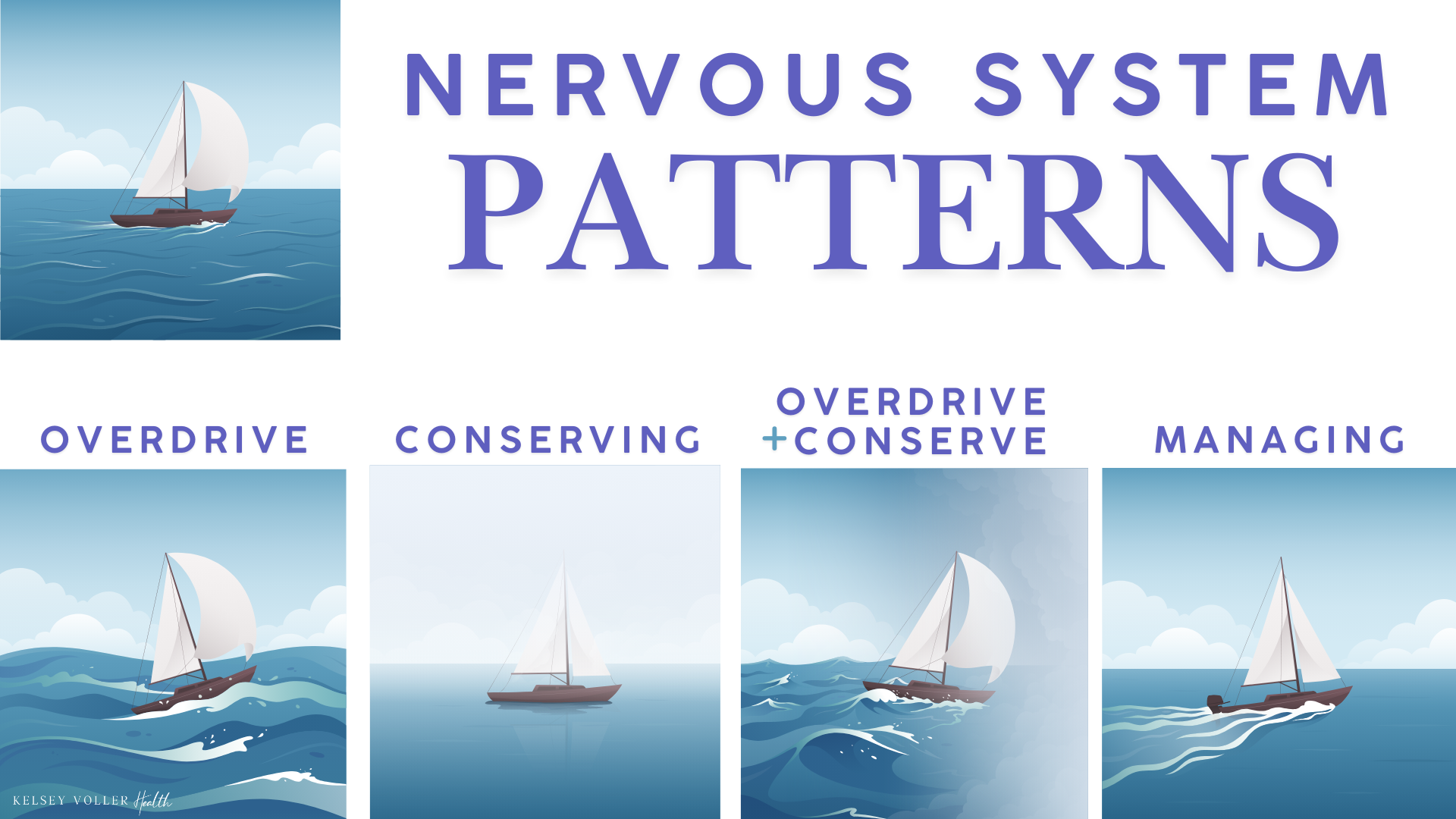
Nervous System pattern: OVERDRIVE
👉🏼 Common Feelings:
Busy
Urgent
Pressured
Driven
Restless
Wired
Hard to truly settle
"On" even when you're tired
Holding it together by pushing through
Common Experiences:
Difficulty slowing down or resting 😬
Feeling internally activated or “on”, even during downtime 😵💫
Staying productive despite fatigue
Trouble fully relaxing, even when you try 🙃
What this pattern is trying to do
Overdrive often develops when your system has learned that staying alert, responsive, in motion, or “on” is the safest way to function. This isn’t a flaw—it’s an adaptive strategy that helped you cope.
Over time, this level of activation can become exhausting and may lead to irritability, depletion, or periods of sudden fatigue. That doesn’t mean anything has gone wrong. It means your system has been working very hard for a long time.
This pattern is not a failure or mistake. It’s a protective strategy your nervous system learned to help you cope.
🧠 This pattern often shows up in people who are:
Highly capable
Responsible
Sensitive to their environment
Used to meeting demands by pushing through
Keep in mind 👇🏼
Many people with an Overdrive pattern don’t look overwhelmed from the outside — but their bodies feel it. Overdrive means your system learned that staying activated was the safest way to keep going.
💓 A gentle reframe
Overdrive is not a flaw. Nothing about this means your body is broken. The overdrive pattern reflects a nervous system that adapted when slowing down didn’t feel like an option.
The work here isn’t forcing calm — it’s helping your system learn that it’s safe to downshift gradually.
👉🏼 Supportive next steps (no fixing required)
Short, frequent pauses instead of long, forced rest
Noticing early signs of effort increasing before exhaustion hits
Practices that allow some release without collapse
Gently building tolerance for low-stimulation moments
Curious how to work with this pattern?
Important Scope & Disclaimer
Somatic work offered through this practice is educational and wellness-oriented. It is not medical care, psychotherapy, mental health treatment, or diagnosis, and it is not a substitute for licensed medical or mental health care. Participation is voluntary, and individual experiences vary. No specific outcomes are promised or guaranteed. Clients are responsible for their own healthcare decisions and are encouraged to seek guidance from licensed professionals for medical or mental health concerns. Descriptions of nervous system patterns are provided for educational and informational purposes only and are not diagnostic or intended to identify or treat any medical or psychological condition.
This assessment is for educational and reflective purposes only. It does not diagnose or treat any medical or mental health condition. Nervous system patterns can shift over time and may look different in different contexts.
The Nervous System Pattern framework and related illustrations are the intellectual property of Kelsey Voller Health LLC.