
Your Results: OVERDRIVE-CONSERVE
Your nervous system appears to manage stress and sensory load by:
moving between overdrive & conserving energy.
What this pattern may look like
Your nervous system alternates between periods of high functioning and sudden depletion. You may feel capable, productive, or “fine” for a while — and then unexpectedly hit a wall where energy drops or everything slows down.
This pattern can feel confusing or hard to predict.
You may function well for periods of time, then suddenly feel depleted or shut down. This pattern is very common in sensitive or high-capacity nervous systems.
Support focuses on stabilization and flexibility rather than pushing harder.
Overdrive-Conserve Motto: move between high activation (overdrive) and energy conservation.
Ocean & Sailboat
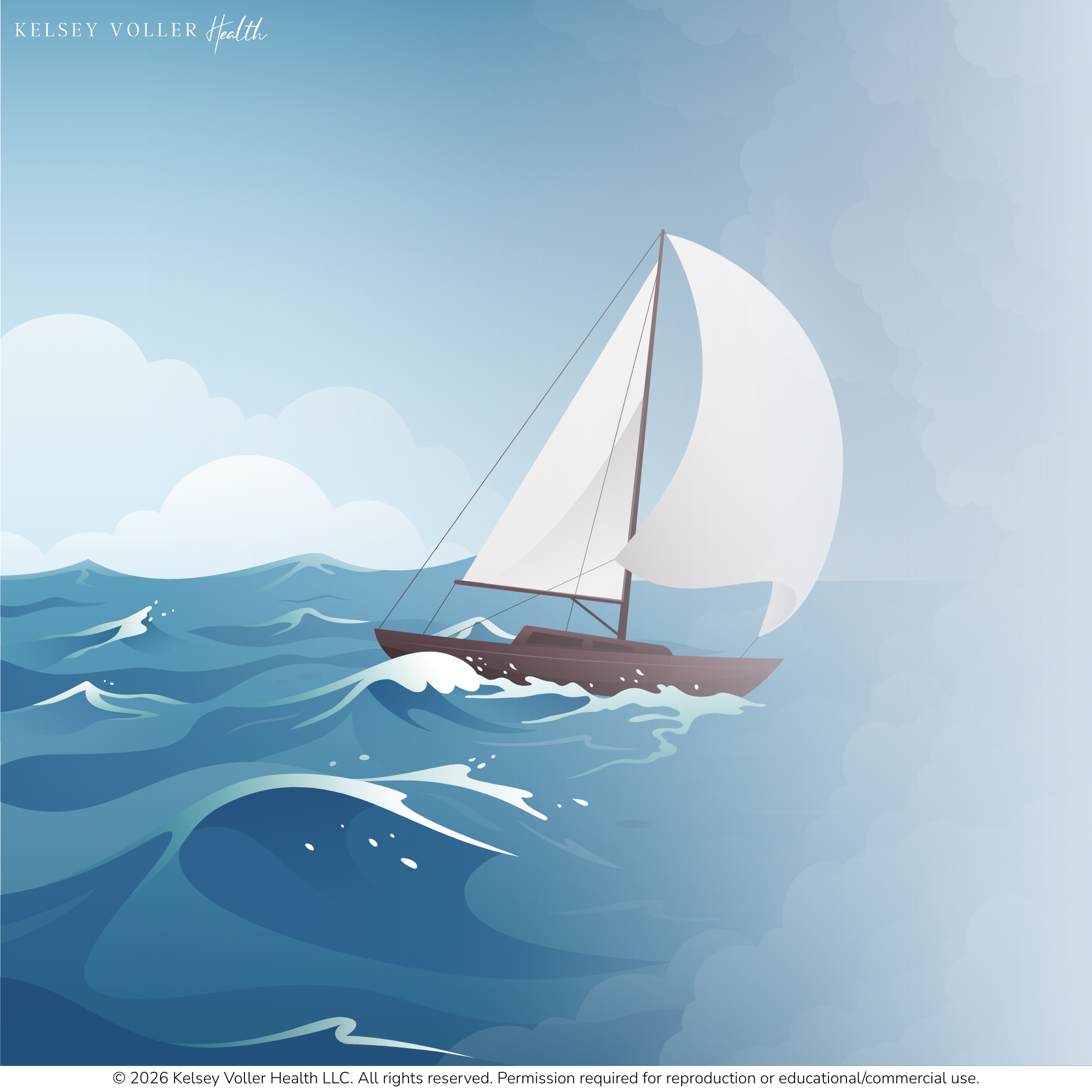
One way to think about nervous system patterns is like navigating a sailboat on the ocean. The ocean 🌊 represents the nervous system, and the sailboat ⛵️ represents your lived experience in your body.
Overdrive-Conserve: The ocean water 🌊 (your nervous system) shifts between choppy waves and very still water. The sailboat ⛵️ (your experience in your body) may move quickly at times and then suddenly lose momentum, alternating between pushing through waves and drifting when the wind fades.
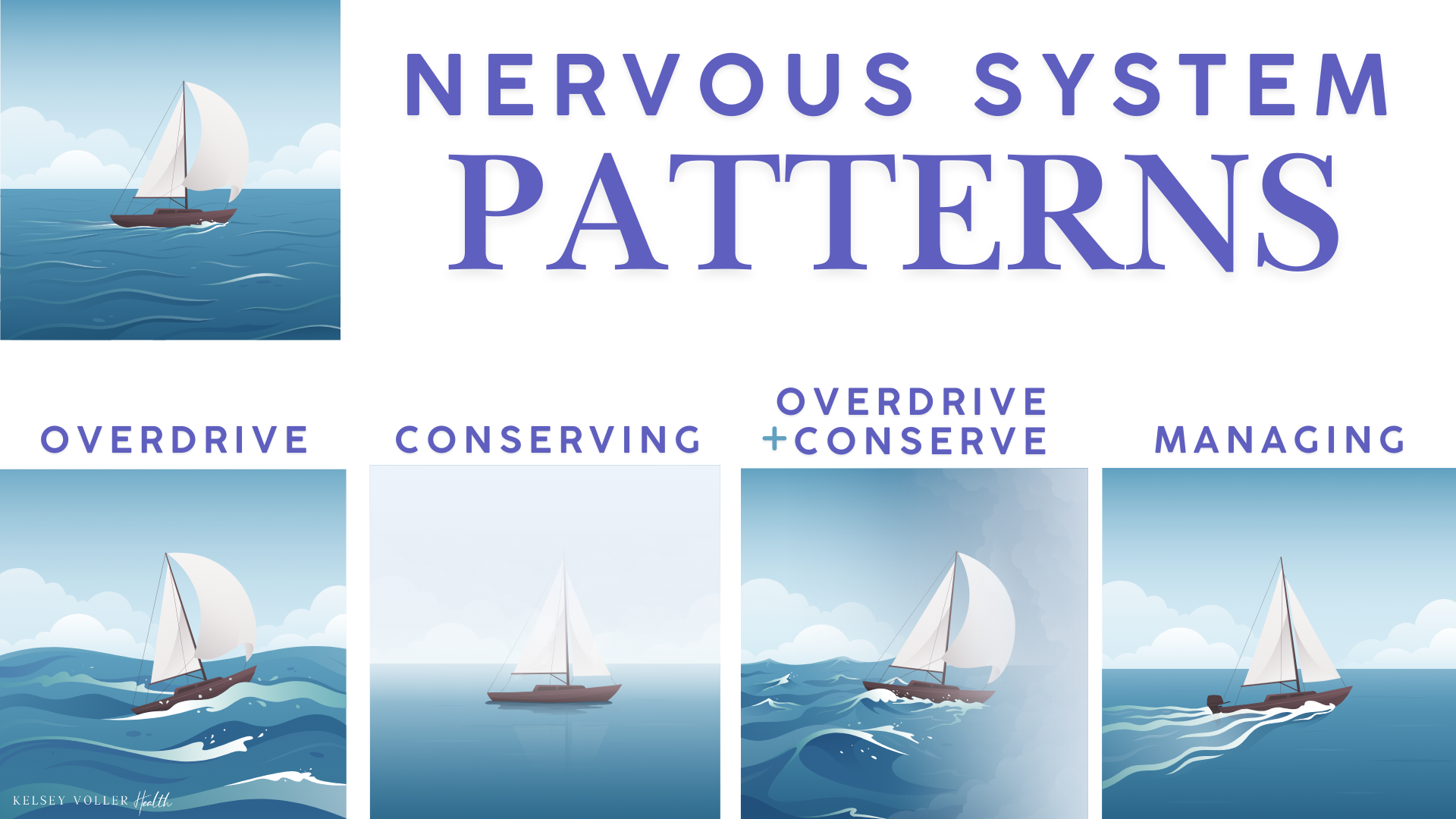
nervous system pattern: overdrive + Conserve
👉🏼 Common Feelings:
Capable… until suddenly exhausted
Relieved when you can finally stop
Frustrated by inconsistent energy
Disconnected from early signs of strain
Unsure how much you can take on
Common Experiences:
Doing “fine” until you suddenly aren’t
Doing well for stretches, then crashing
Realizing you were overwhelmed only after the fact
Difficulty pacing yourself
Trouble predicting stamina or capacity
Others not seeing the internal cost
Relief when you can finally stop holding it together
What this pattern is trying to do 🤔
This pattern reflects a nervous system that oscillates between survival strategies.
At times, your system mobilizes strongly to meet demands. When that becomes unsustainable, it shifts into conservation to recover. This back-and-forth isn’t inconsistency — it’s your system adapting the best way it knows how.
🧠 This pattern often shows up in people who are:
Mask internal strain
Override body signals to keep going
Rely on adrenaline to meet expectations
Carry a lot of responsibility or pressure
Keep in mind 👇🏼
It’s not inconsistency. It’s a system oscillating between survival strategies.
This pattern responds beautifully to somatic work that focuses on integration and flexibility, not suppression.
💓 A gentle reframe
Overdrive–Conserve is not a personal failing.
It a nervous system protective pattern that develops when steady pacing hasn't been available.
Your system learned to meet demands when needed through overdrive — and recover the only way it could - by conserving energy.
👉🏼 Supportive next steps (no fixing required)
Catching strain earlier, before depletion hits
Learning to titrate effort instead of all-or-nothing
Reducing reliance on adrenaline-driven states
Increasing access to body signals during activity
Building smoother transitions between effort and rest
Curious how to work with this pattern?
Important Scope & Disclaimer
Somatic work offered through this practice is educational and wellness-oriented. It is not medical care, psychotherapy, mental health treatment, or diagnosis, and it is not a substitute for licensed medical or mental health care. Participation is voluntary, and individual experiences vary. No specific outcomes are promised or guaranteed. Clients are responsible for their own healthcare decisions and are encouraged to seek guidance from licensed professionals for medical or mental health concerns. Descriptions of nervous system patterns are provided for educational and informational purposes only and are not diagnostic or intended to identify or treat any medical or psychological condition.
This assessment is for educational and reflective purposes only. It does not diagnose or treat any medical or mental health condition. Nervous system patterns can shift over time and may look different in different contexts.